
Coyotes in Our Community: Information, Safety, and Protecting Pets in Hamilton County, OH
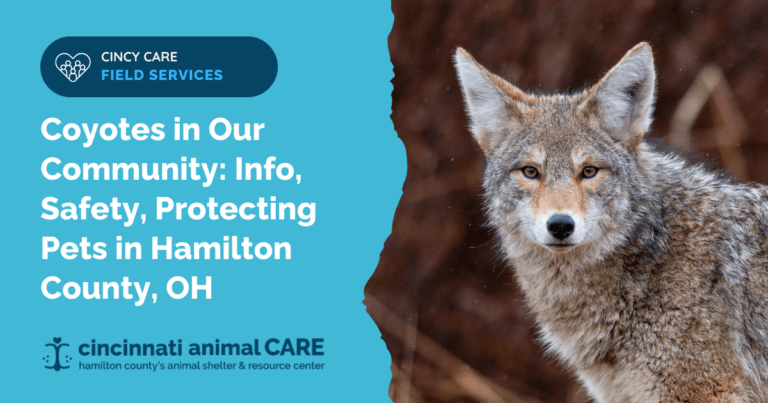
Practical guidance for residents on understanding coyote behavior and responding safely to sightings
At Cincinnati Animal CARE, Hamilton County’s animal shelter, we often hear from community members who have spotted coyotes in their neighborhoods and are unsure what to do. While coyotes are considered wildlife and are under the jurisdiction of the Ohio Division of Wildlife, our role is to help share clear, practical information to keep people and pets safe. Coyotes are highly adaptable animals that can live in rural, suburban, and urban areas, including right here in Hamilton County. Understanding their behavior and knowing how to respond if you see one can help reduce fear, prevent conflict, and protect both residents and animals.
Information About Coyotes
We often receive calls about coyotes sighted in Hamilton County. While the Ohio Division of Wildlife is the agency with jurisdiction over wildlife, we want to provide information about coyotes and what to do if you see one.
Coyotes are not native to Ohio but are very versatile and have made their homes in various wildland habitats, as well as in rural and urban areas. As a reminder when seeing wildlife like coyotes, please use caution. It is important to stay away from coyotes. If you would like to report the sighting of a coyote, you may report what you saw to the Ohio Division of Wildlife and/or the coyote project.
What To Do If a Coyote Is Seen
If you see a coyote, keep an eye on it and observe from afar. Do not approach or engage with a coyote; walk away calmly and leave the area immediately. Do not run. Keep small children close by and dogs on a leash. Please know that small dogs/cats while even on a leash can be hunted and grabbed by coyotes. Use extreme caution when walking small dogs or cats on a leash where coyotes have been sighted. It is helpful to report any sightings on your local neighborhood apps like Next Door to help ensure the pet owners and parents in your community are aware that coyotes have been seen.
What To Do If Approached by a Coyote
Most coyotes fear people, but those that learn to associate humans with food may adjust to the presence of humans. Documented coyote attacks on people are rare and are usually related to handfeeding or the presence of a dog. When a coyote is encountered within 50 feet and does not move away on its own, use the following tactics—known as hazing—to intimidate it and encourage it to maintain a safe distance.
- Maintain eye contact.
- Be as big and loud as possible.
- Wave arms or use a tool like an umbrella to scare, not injure, the animal.
- If a coyote continues to approach, do not run or turn away. Continue to exaggerate the above gestures while backing away slowly.
In the Neighborhood
Do these five things to reduce conflict with coyotes:
- Never feed or attempt to tame a coyote.
- Never leave pet food outside.
- Tightly secure garbage, compost, and recycling bins.
- Remove fallen fruit from the ground as quickly as possible.
- Trim bushes and close off access to spaces under porches and decks to minimize opportunities for coyotes to shelter.
Coyotes and Pets
Coyotes can pose a danger to pets. Follow these guidelines to keep dogs and cats safe:
- Never let dogs chase or play with a coyote.
- When encountering a coyote, leash larger dogs, pick up smaller dogs, haze the coyote (as described above), and leave the area calmly.
- Coyotes see domestic cats as prey. Keeping cats indoors is the best way to ensure their safety.
In Conclusion
Our goal is to support a safe, informed community where people, pets, and wildlife can coexist responsibly. If you see a coyote, use caution, follow the guidance above, and report sightings to the appropriate wildlife authorities when needed. By securing attractants, supervising pets, and sharing information with neighbors, we can reduce risky encounters and keep our community safer for everyone. For more detailed, wildlife-specific guidance, we encourage you to visit the Ohio Division of Wildlife and Ohio Coyote Project resources linked above.
Learn more:
- https://ohiocoyote.org/
- https://ohiodnr.gov/discover-and-learn/animals/mammals/coyote